Tools
Open WebUI vs AnythingLLM
Compare two leading local AI interfaces for retrieval, chat, teams, and automation.
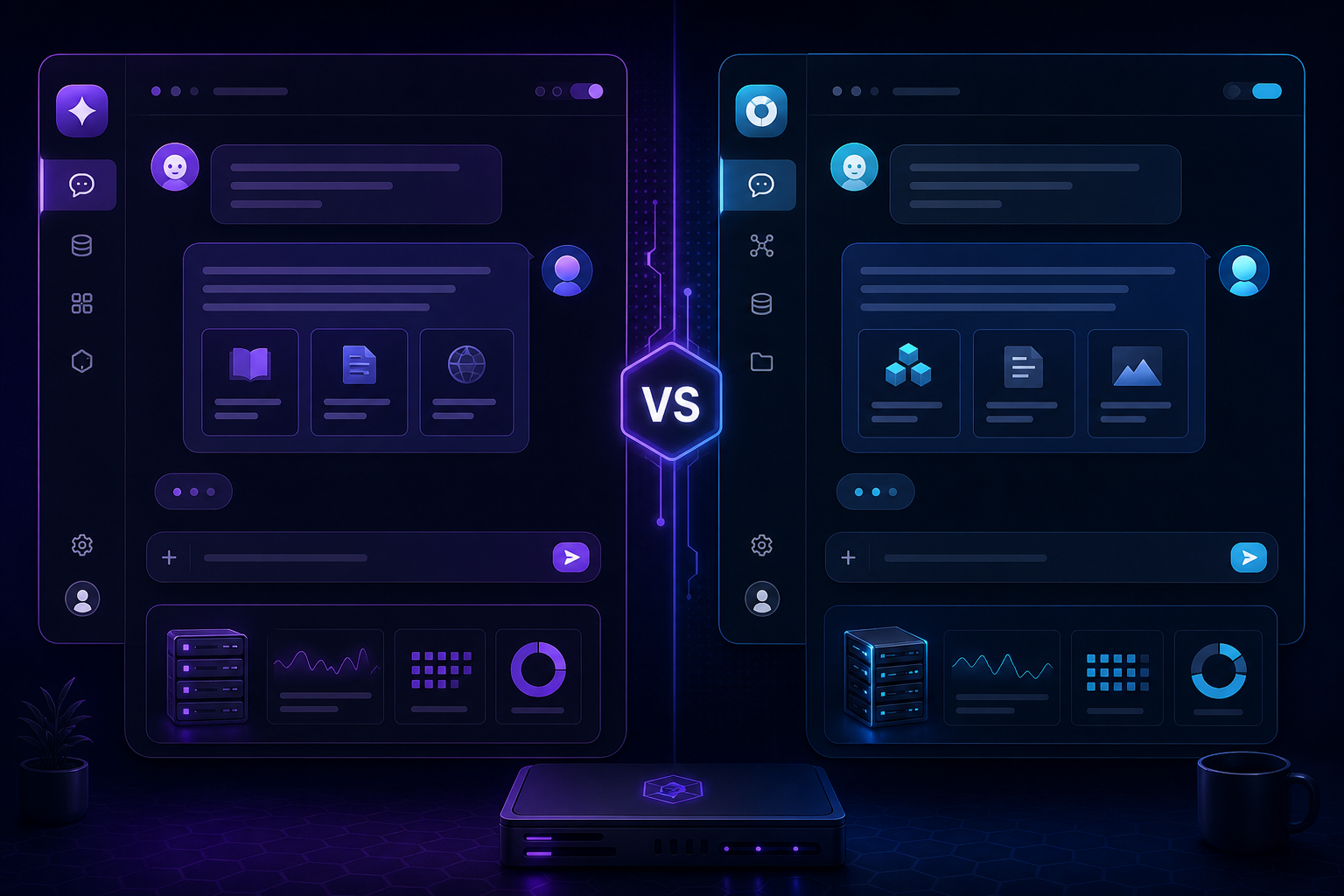
Open WebUI vs AnythingLLM
Open WebUI and AnythingLLM both make local models easier to use, but they shine in different situations. The right choice depends on whether you want a polished chat front end, a document workspace, or a team knowledge tool.
Where Open WebUI fits
Open WebUI is a strong default for local chat. It pairs well with Ollama, supports model switching, and gives non-terminal users a familiar interface. If your goal is private ChatGPT-like usage on your own infrastructure, start here.
It is especially useful after following How to Run Llama 3 Locally with Ollama.
Where AnythingLLM fits
AnythingLLM leans toward workspaces, documents, retrieval, and organization. It is attractive when you want to ask questions across collections of files or separate knowledge areas by project.
For business workflows, pair it with ideas from Self-Hosted AI for Small Businesses.
Comparing the experience
Open WebUI feels like a fast chat cockpit. AnythingLLM feels like a knowledge workspace. Both can be useful in the same stack: one for everyday model interaction and one for document-centered work.
Deployment considerations
Run either behind authentication, especially if exposed beyond localhost. Use Docker when you want repeatable setup, and keep model runtimes separate from the interface so you can swap tools later.
Recommendation
Choose Open WebUI first if you want a general local chat interface. Choose AnythingLLM first if documents and retrieval are the main reason you are self-hosting AI.
Conclusion
The best interface is the one that matches the job. Keep your model runtime modular so the UI layer can evolve without rebuilding everything.
FAQ
Can both tools use Ollama?
Yes. Ollama is a common local runtime for both types of interfaces.
Which is better for teams?
AnythingLLM may fit team knowledge work better, while Open WebUI is excellent for broad chat usage.
Should either be public on the internet?
Not without strong authentication, TLS, patching, and monitoring.
