Guides
Design a Two-Tier AI Stack for Speed and Privacy
Balance fast cloud models and private local models with a two-tier AI architecture that protects sensitive work.
Design a Two-Tier AI Stack for Speed and Privacy
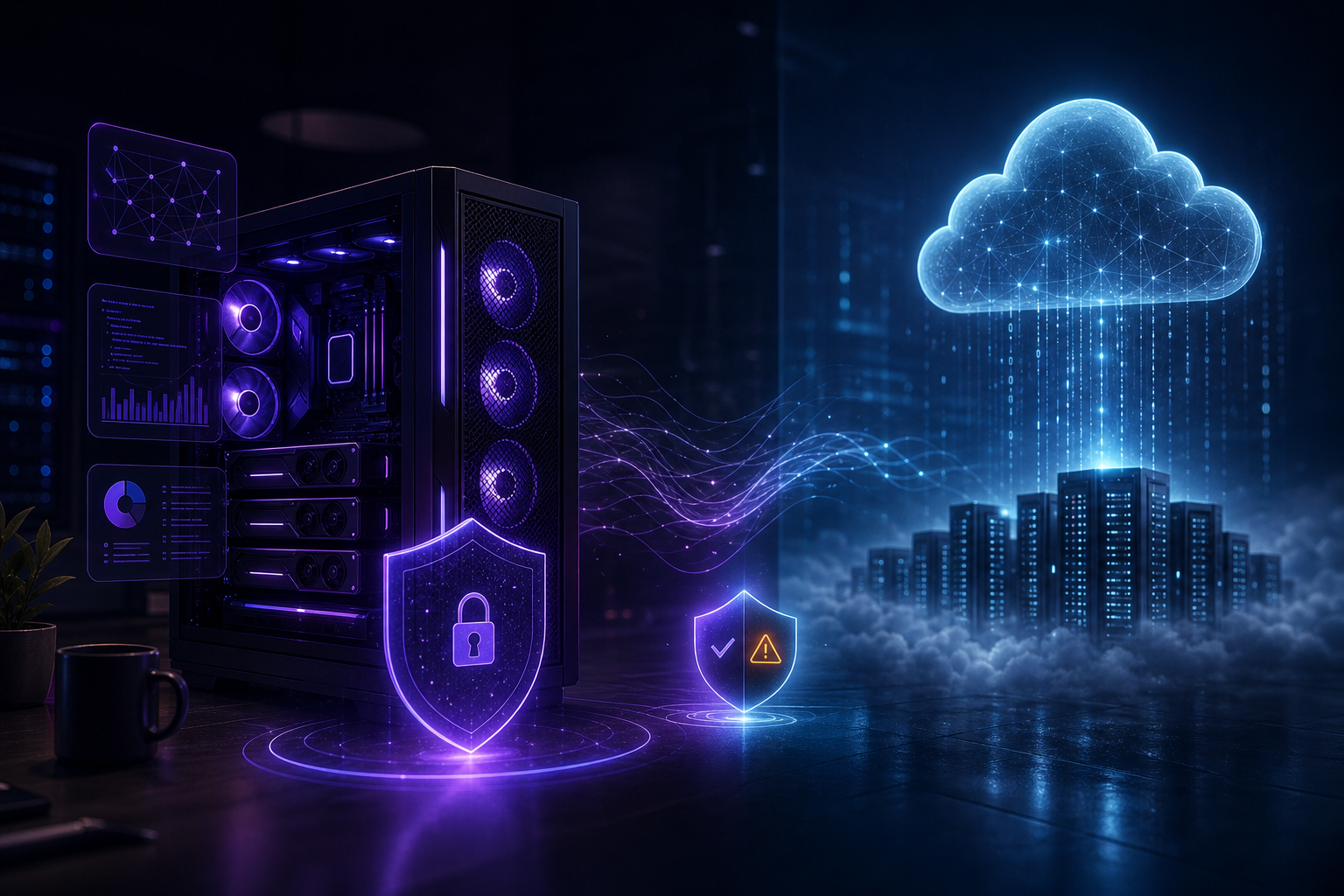
A two-tier AI stack uses the right model for the right job. Fast public models can handle low-risk tasks, while local models protect sensitive work and keep your most important data in-house.
Separate the workloads
Put summarisation, drafting, and general brainstorming on one side, and confidential documents, internal planning, and client data on the other.
Use private infrastructure for the sensitive tier
The comparison in Private AI vs Cloud AI helps clarify the trade-offs, while Proxmox Setup for AI Workloads shows how to create a stable host for the private tier.
Design for graceful fallback
If the private model is busy, slow, or unavailable, decide in advance whether the request should queue, retry, or fall back to a less sensitive path.
Keep the user experience simple
People should not have to know which model is behind each request. The routing logic should be invisible unless a failure needs attention.
Conclusion
Two-tier architecture is a practical compromise. It lets you move quickly without giving up the privacy and control that make self-hosted AI worth the effort.
FAQ
Is cloud AI still useful?
Yes, especially for low-risk tasks that benefit from speed and convenience.
What should stay local?
Anything confidential, regulated, or strategically important.
Do I need complex routing?
Not at first. A simple decision tree is often enough.


