Tutorials
Build Your Own AI Assistant with n8n
Connect local models to repeatable workflows, notifications, and private data sources.
Build Your Own AI Assistant with n8n
An AI assistant becomes valuable when it can do repeatable work. n8n is a practical way to connect local models to triggers, databases, notifications, and approval steps while keeping sensitive context inside your own environment.
Start with one narrow job
Do not begin with a universal assistant. Pick one workflow: summarize support tickets, triage notes, classify inbound requests, or draft a weekly report. A narrow job is easier to test and safer to automate.
For model setup, start with How to Run Llama 3 Locally with Ollama.
Design the workflow
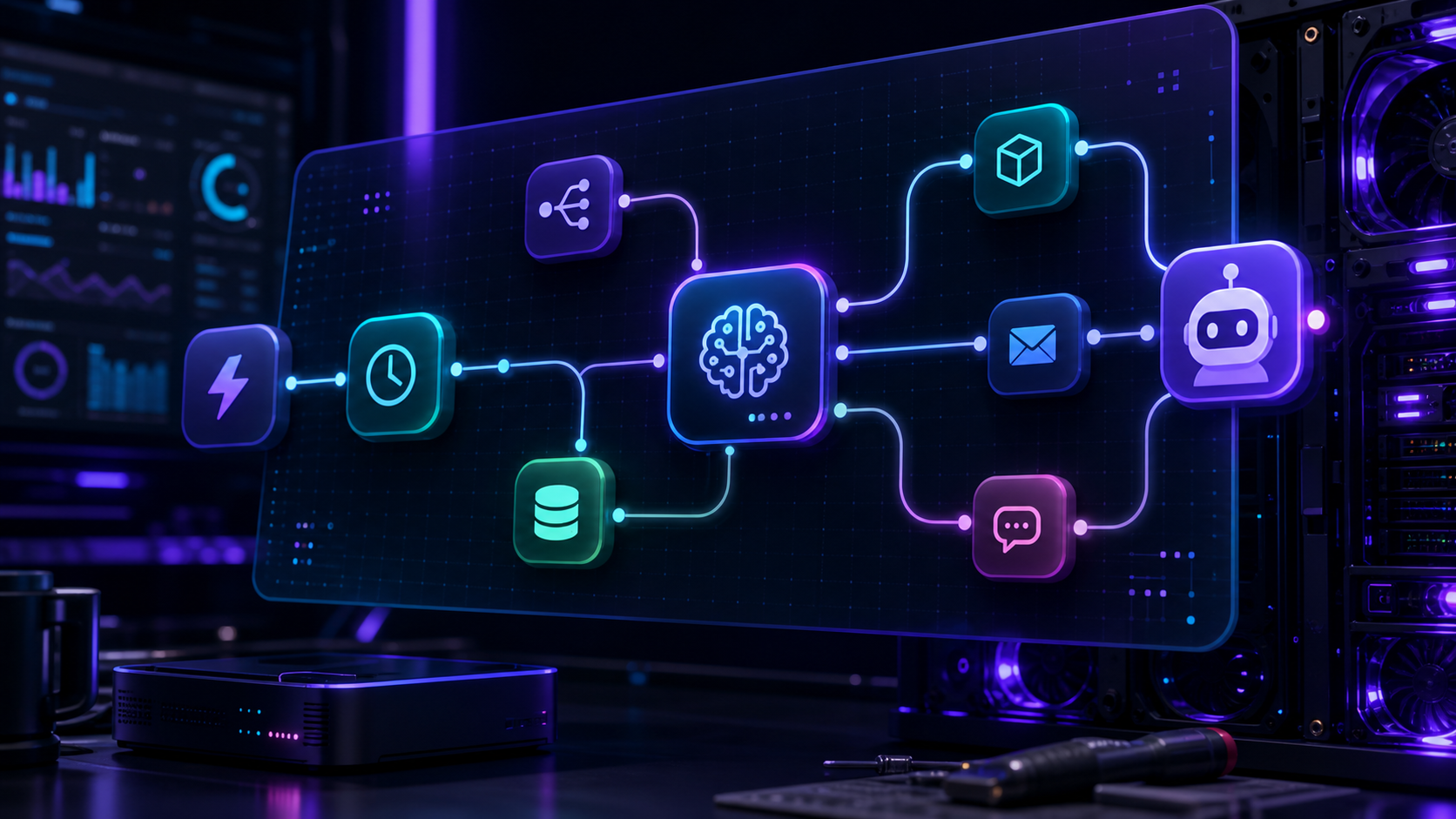
A good assistant workflow has inputs, context, model instructions, validation, and an output destination. Add a human approval step before any action that sends messages, changes records, or deletes data.
Keep prompts versioned. Treat them like code.
Connect local AI
Point n8n at your local model endpoint or an internal service that wraps it. Keep credentials in environment variables. Add timeouts and fallbacks so one slow model request does not block every workflow.
Add memory carefully
Memory can mean a database, vector search, or just structured notes from previous runs. Store only what the workflow needs. Sensitive documents should be indexed intentionally, not dumped into a general assistant.
Test and monitor
Run the assistant on historical examples before using it live. Track failures, weird outputs, and latency. Add logging that explains what happened without exposing private data unnecessarily.
Conclusion
n8n turns local AI from a chat box into a dependable tool. Start narrow, keep humans in the loop for risky actions, and expand only after the workflow earns trust.
FAQ
Can n8n run fully self-hosted?
Yes. It is commonly deployed with Docker and can run alongside local AI services.
Should an AI assistant take actions automatically?
Only low-risk actions should be fully automatic. Use approvals for anything external or destructive.
What model should I use?
Use a smaller fast model for classification and a stronger model for writing or reasoning-heavy steps.