Guides
Stop Hallucinations in Local RAG Systems
Reduce fabricated answers in local RAG with retrieval checks, prompt controls, and better evaluation.
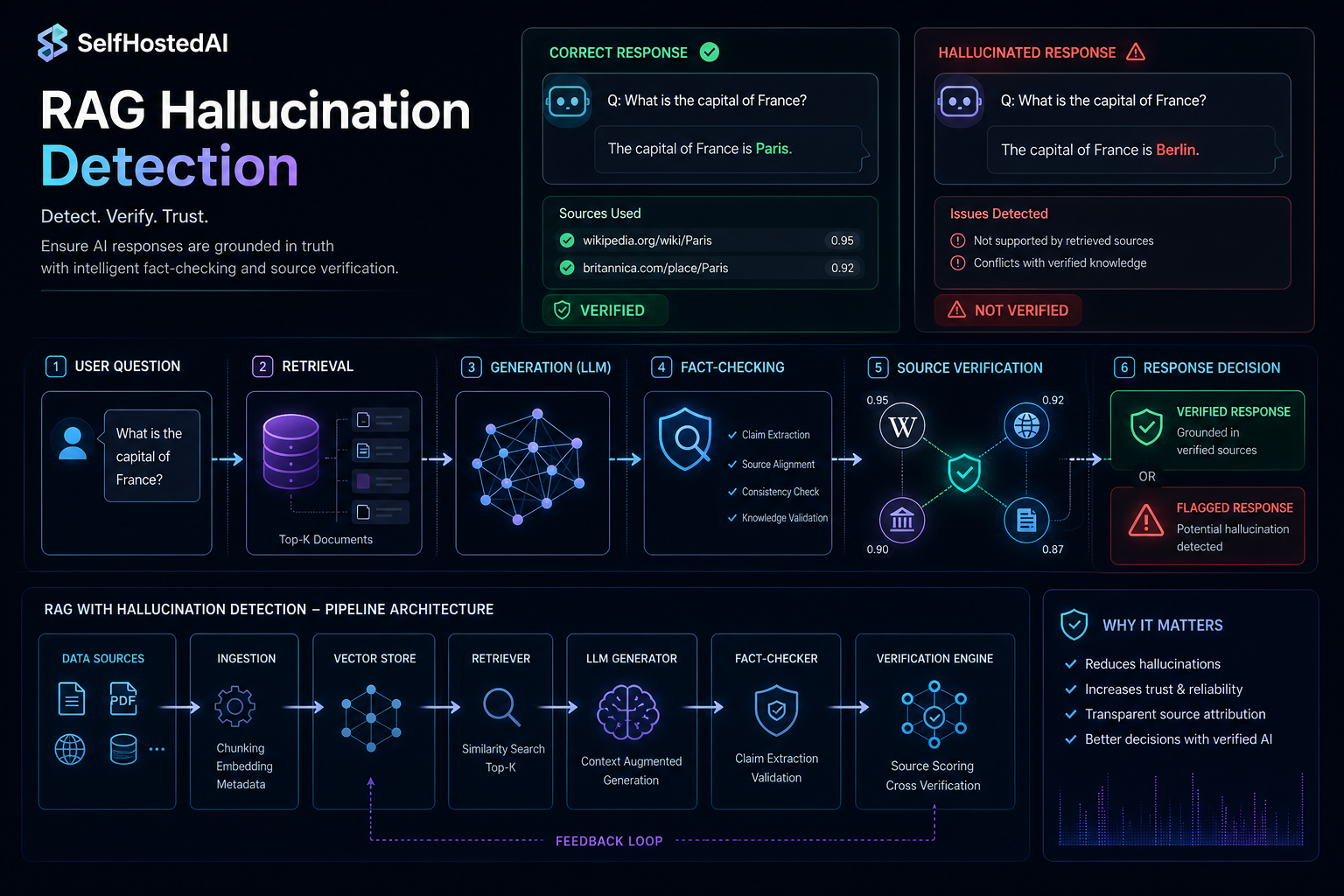
Stop Hallucinations in Local RAG Systems
Hallucinations are often a sign that the system is being asked to answer beyond the evidence it has. In local RAG, the fix is usually better retrieval discipline rather than just a bigger model.
Make the system admit uncertainty
Tell the model to say when it cannot find enough evidence. That simple rule cuts down on confident nonsense and pushes the answer back toward the source material.
If you are still building the retrieval stack, begin with Build a Local RAG Pipeline That Actually Answers Questions.
Check the retrieved context
If the wrong chunks are being passed in, the answer will often drift. Test retrieval directly and inspect the source passages before blaming generation.
Narrow the scope
Hallucinations get worse when the question is too broad. Ask narrower questions, use better metadata, and split large topics into cleaner collections.
Improve prompts and outputs
Require citations, require quotes where appropriate, and prefer short answers over speculative essays. The model should produce evidence-backed output, not a polished guess.
Read Prompt Tuning for Local LLMs Without Overcomplicating Things for prompt structure ideas.
Conclusion
The best anti-hallucination strategy is a boring one: better retrieval, narrower questions, and stronger answer rules. That combination beats wishful thinking.
FAQ
Can a local model be reliable in RAG?
Yes, if retrieval quality and prompting are disciplined.
Does a bigger model solve hallucinations?
Sometimes it helps, but it does not fix bad retrieval or vague prompts.
Should I always require citations?
For document answers, yes. Citations make debugging and trust much easier.


