Tutorials
How to Set Up OpenCode as a Private AI Coding Agent with Local Models
Install OpenCode, connect it to a local model backend, and turn it into a practical private coding agent for everyday development work.

How to Set Up OpenCode as a Private AI Coding Agent with Local Models
OpenCode is one of the clearest signs that the coding-agent category has moved from novelty to infrastructure. If you want a capable terminal-based agent without giving up local control, the best approach is to pair OpenCode with a self-hosted model backend and a few operational guardrails.
Why OpenCode is getting attention
OpenCode has momentum because it feels familiar to developers who already live in the terminal. You can point it at a codebase, let it inspect files, and use the same kind of iterative tool loop people now expect from modern coding agents.
If you are comparing the broader landscape, start with Local AI for Software Developers: Code Completion and Review with Private Models and Run Kimi Code Locally: MoonshotAI's Open-Source Coding Agent Compared to Claude Code.
Choose a model backend first
Do not begin with the agent UI. Start with the model endpoint. For a private setup, that usually means one of these paths:
A local OpenAI-compatible server
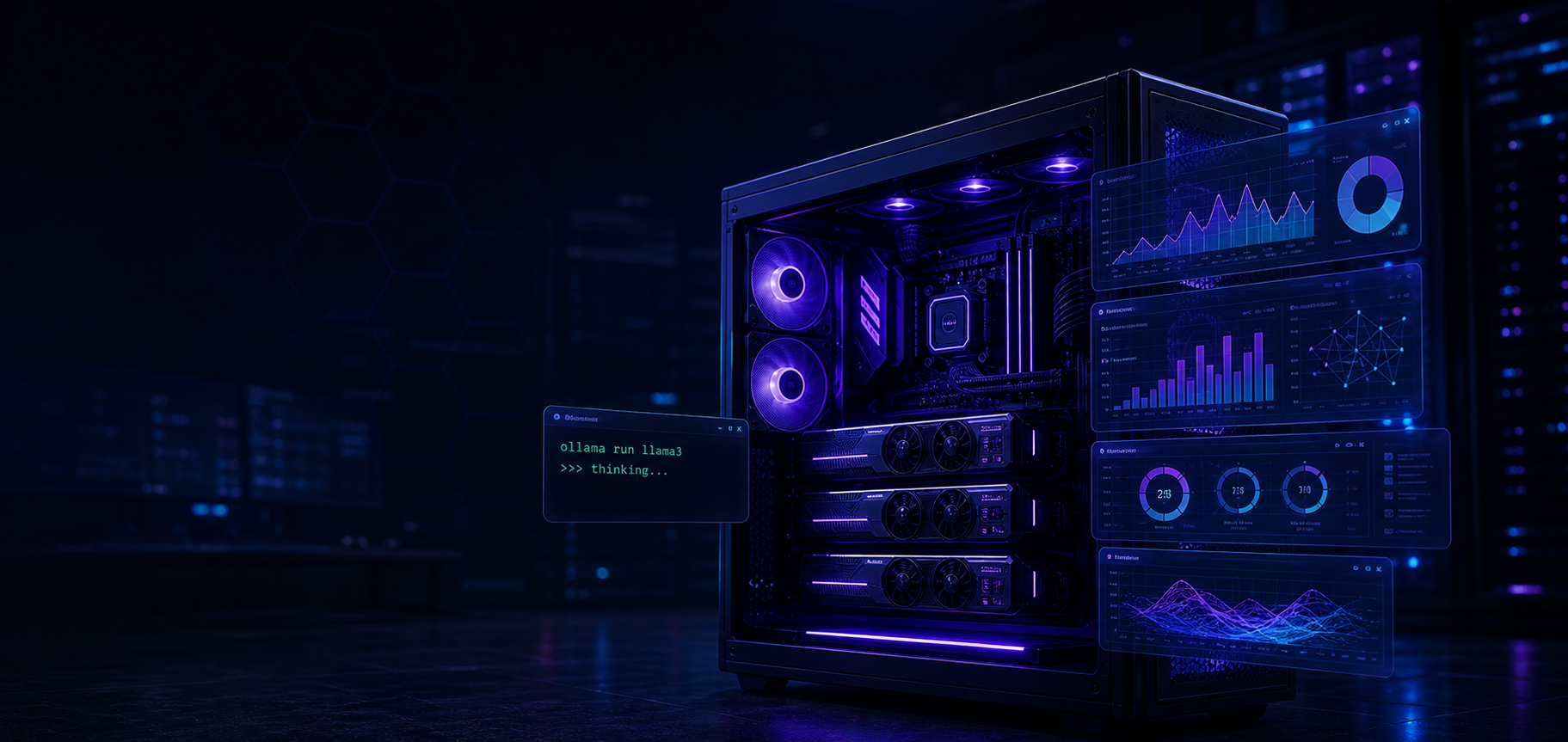
Use Ollama, LM Studio, vLLM, or a similar runtime that can expose an OpenAI-compatible API. That makes it easier to swap models later without rebuilding your workflow.
A model that matches your hardware
For fast coding assistance, choose a model that can answer quickly on your machine rather than a model that looks impressive on paper but causes constant latency.
For model selection help, read Mistral vs Llama vs Qwen: Choosing the Best Open-Weight Model Family.
Install OpenCode and connect it
Install OpenCode using the project’s preferred package method, then point it at your local backend. Keep the configuration minimal at first: model name, endpoint, and any required API key placeholder.
Once the basic connection works, verify three things:
1. It can read the repository
2. It can write files in the workspace
3. It can make at least one successful tool call end to end
If any of those fail, fix the backend before you start adding custom prompts or plugins.
Add persistence so the agent does not forget everything
Coding agents are most useful when they remember what happened in previous sessions. If you want shared context across tools and models, pair OpenCode with Cross-Agent Memory Is Here: Run ai-memory for Persistent Context Between Claude Code, Codex, and Cursor.
The goal is simple: avoid re-explaining the repo structure, the deployment pattern, and the failed experiments every time you reopen a task.
Work in a safe project boundary
Never point a coding agent at your whole home directory or a production server without clear limits. Give it a dedicated workspace, a narrow repo scope, and a rollback path.
Practical guardrails
- Use a separate git branch for agent-generated changes
- Keep credentials out of the workspace
- Prefer read-only access for anything outside the project folder
- Review every destructive command before it runs
If you expose the agent beyond localhost, follow How to Secure a Self-Hosted AI Server before opening any network access.
A simple daily workflow
The best OpenCode workflow is boring and repeatable:
1. Open the repo and describe the task
2. Let the agent inspect the files
3. Ask for a small change first
4. Run tests or a build
5. Review the diff manually
This fits the pattern in Local AI for Software Developers: Code Completion and Review with Private Models: use the agent to accelerate the loop, not replace your judgement.
When OpenCode is the right choice
OpenCode is a strong fit if you want:
- a terminal-native coding agent
- local model control
- a developer-friendly workflow without vendor lock-in
- a stack that can grow into memory, skills, and multi-agent tools later
If you want a more agent-platform style approach, compare it with Run Kimi Code Locally: MoonshotAI's Open-Source Coding Agent Compared to Claude Code.
Conclusion
OpenCode is part of a broader shift towards self-hosted, tool-using coding agents. Pair it with a local model backend, keep the workspace bounded, add persistent memory if you need continuity, and it becomes a genuinely useful part of a private developer stack.
FAQ
Can OpenCode work with local models?
Yes, as long as your model backend exposes a compatible API and your chosen model is capable enough for coding tasks.
Should I give the agent full access to my machine?
No. Keep it inside a dedicated workspace and limit access to only what it needs.
What should I add next after the first setup?
adding shared memory, a test command the agent can run automatically, and a rollback strategy for unsafe changes.