Tutorials
Secure Docker Networks for Local AI Services
Build safer Docker networks for local AI by separating public fronts, private backends, and sensitive data.
Secure Docker Networks for Local AI Services
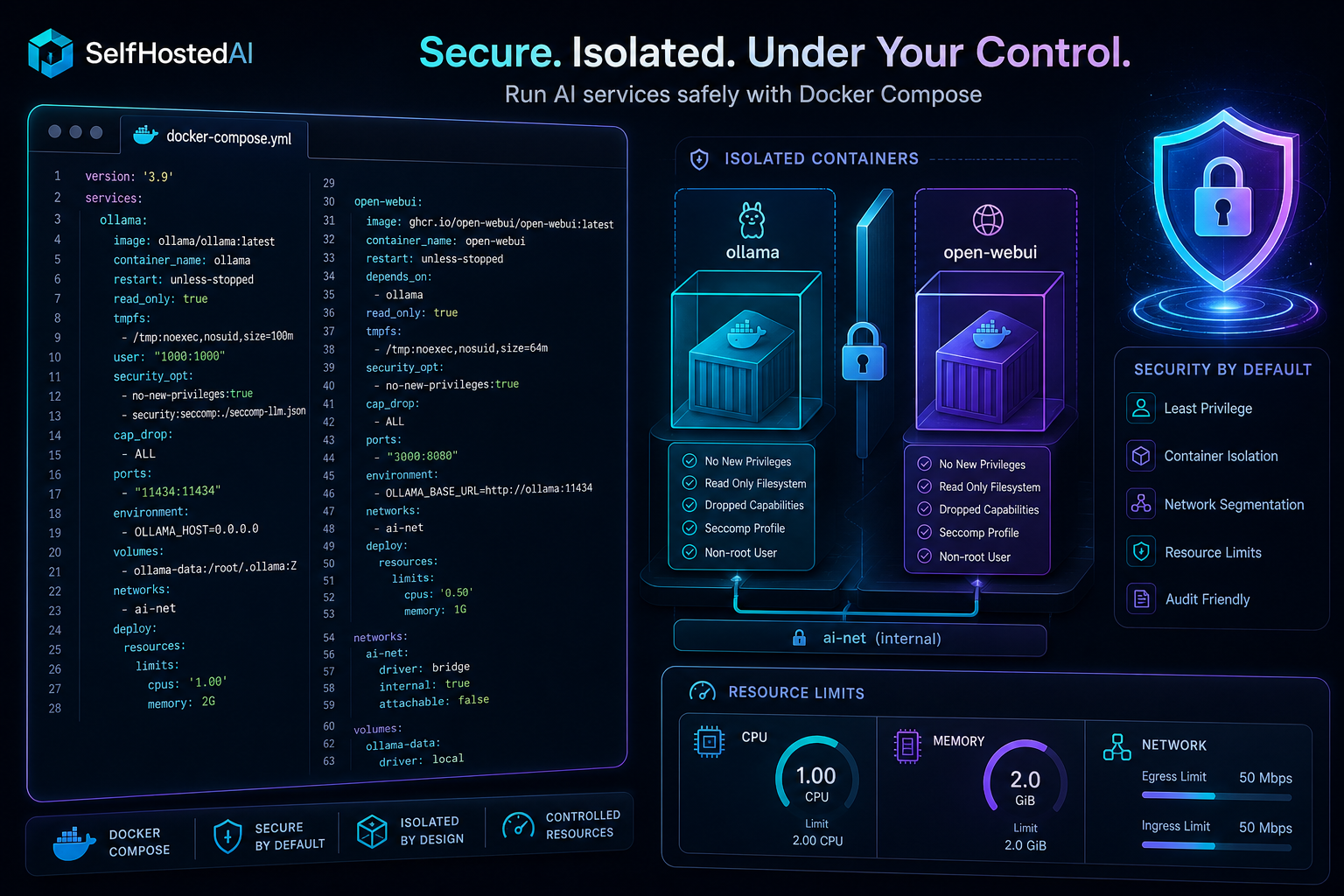
Docker makes local AI easy to deploy, but a flat network makes it easy to expose too much. The goal is to separate what users touch from what databases and model services need.
Split public and private paths
Put the reverse proxy, UI, and backend services into different networks when you can. A clean structure starts with Docker Setup for Local AI Tools and becomes much safer once you apply the hardening ideas in Harden Docker Compose Stacks for Local AI Services.
Limit service-to-service reach
Only allow the ports each container needs. Databases, vector stores, and embedding services rarely need broad access from every other container in the stack.
Control what leaves the stack
If a service can reach the internet, document why. Many local AI services only need outbound access for model downloads or updates, and that can be tightly scheduled.
Pair network design with monitoring
When traffic patterns change, you want to know. Tie the network layout back to Monitor Self-Hosted AI Services with Uptime, Logs, and Metrics so unexpected connections are visible quickly.
Conclusion
Secure Docker networking is mostly disciplined separation. Keep the public edge small, keep the private services hidden, and make every connection intentional.